Voices of Deoli
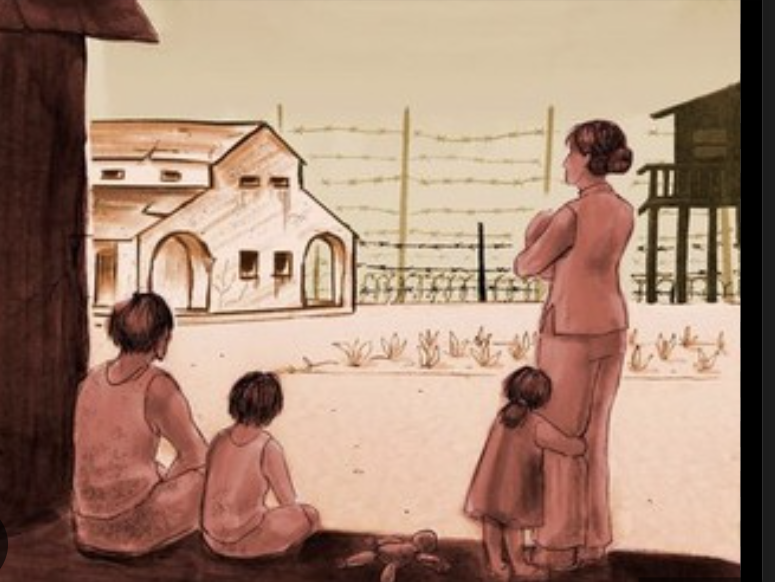
The documentary, Voices of Deoli, directed by Lulu Men and released in 2025, presents an intimate account of the 1962 Sino-Indian War and the internment of Chinese-Indian families in the Deoli camps. Survivors Joy Ma, Yin Marsh, Andy Hsieh, Steven Lee, William Ma, Bobby and Lucy Wong, and Michael Cheng, describe both their time in the camp and the aftermath of grappling with their trauma in the years that followed. Their stories included physical violence, hunger, contaminated living conditions, and strict censorship. After release, they confronted anti-Chinese hostility, as Chinese-owned properties were declared “Enemy Property”, travel became severely restricted, and many were required to purchase residency permits to remain in India. These obstacles, combined with the displacement of internees and their difficulties obtaining education or stable work produced several decades of silence surrounding Deoli. That silence persisted until 2010, when several of the survivors featured in the film formed the Association of India Deoli Camp Internees to reconnect with others and make the history public.
During the post-screening conversation, survivor Michael Cheng and his daughter, Yeeva Cheng, clarified that the purpose of Voices of Deoli was not to obtain an apology from the Indian government. Instead, as Yeeva explained, the goal was “to help us interconnect in the room and hear voices, nuanced and enriched stories, so we can be in solidarity with the community”. To encourage this, she introduced an interactive activity in which each viewer received a notecard and wrote on one side “a history happening now that cannot be forgotten,” and on the other, a short statement about how they would “be part of that history”. Participants then pinned their cards to a banner at the front of the room. The exercise was designed to link our present responsibilities to the survivors’ past. Yet despite this, no one, including me, spoke during the discussion.
My silence stemmed from sympathy rather than disinterest. I respected the survivors for sharing their experiences, but I could not imagine experiencing internment or the trauma that shaped their lives afterward. I wondered if my inability to fully empathize meant I could not contribute to justice for them.
Thinking about Yeeva Cheng’s role helped me reconsider this assumption. She never lived through Deoli, yet she became an executive producer of the documentary and helped create a space for her father’s story. She shows that empathy is not a prerequisite for justice; sympathy paired with commitment, can engender meaningful action. Justice, in this sense, emerges from listening, amplifying, and refusing to let trauma remain unexpressed.
But the dynamic between Michael and his daughter complicates this further. Michael, despite surviving the camp, struggled to understand how his unresolved trauma shaped her childhood. His difficulty empathizing with her in some ways reflects the audience’s silence. Both silences reflect the uncertainty about how to respond to suffering that one cannot fully grasp. This parallel made me reconsider the assumption that sympathy naturally leads to engagement. Engagement requires confidence, willingness, and sometimes discomfort. Sympathy alone does not guarantee it. This raised a deeper question: if the screening’s goal was to “spark dialogue,” was the evening a failure, or did the silence reveal something more complex about how we process historical trauma?
