Experiencing M. NourbeSe Philip’s Zong!
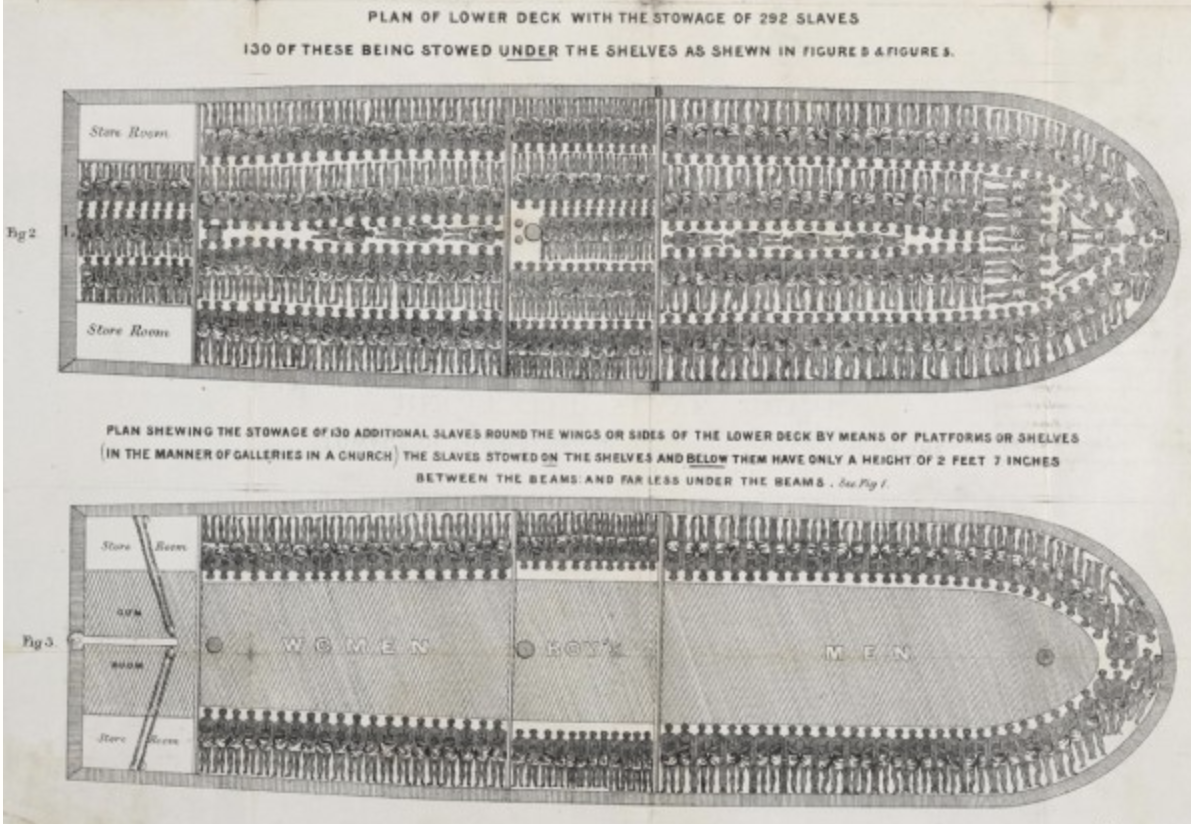
Zong! by M. NourbeSe Philip is not meant to produce meaning. Meaning implies order, intention, and the ability to use concepts to foster understanding. While the enslaved Africans aboard the Zong ship deserve to be understood, they primarily need to be seen. Their lives must come to fruition, and thus, Zong! should be experienced, rather than interpreted. To interpret or understand, the poem risks reducing the enslaved peoples to a fixed historical tragedy. What occurred has already been documented in Gregson v Gilbert, the legal record Philip uses as her source. Yet, language itself possesses its own order and logic which cannot contain the slaves’ experiences. Words, in being shaped by cultural norms, only express what society allows and in turn, are inadequate for conveying what happened aboard the Zong. In Gregson v. Gilbert, legal discourse justified the colonists’ dehumanization of Africans. By repurposing this text, Philip restores humanity to the murdered, forcing readers to experience disorientation and chaos: proof that the enslaved felt and lived.
Specifically looking at the poem on page 179, viewers are immediately drawn to the fainter text, contrasting the five preceding sections that featured discernable black ink. Philip’s decision to make the words less visible alludes to the pervasive water that consumes the enslaved. Furthermore, many of the words in this piece overlay one another, immediately evoking feelings of disorientation and confusion which resemble the slaves’ sentiments.
The section’s opening is especially immersive, immediately placing readers at “the seas”, leaving slaves adrift spiritually and literally (Philip 179). The captives’ condition is seen through the faint, overlapping words which visualize drowning, aligning with the section’s title, “Ebora,” which means underwater spirits (Philip 175). Ebora foreshadows the “fate” and “mortality” haunting the text (Philip 179). While readers know what will happen, the slaves remain unaware of their fate. The recurring “fate,” eventually overpowered by death or “le morte,” reflects the tension between hope and the inevitability of a formidable colonization, as denoted by the use of French (Philip 179). As the text breaks into fragments “there are”, “there is”, and finally “is”, language itself collapses. Meaning dissolves and in that confusion, readers share the captives’ disorientation. This shared experience in which slaves and readers cannot make sense of what is occurring, paradoxically reaffirms their humanity.
Other figures in the text emerge with clarity. “Man” and “my” stand out amid the chaos, representing the ship’s captain and crew who are all men of ownership and power (Philip 179). Likewise, “she” refers to Ruth, one of the women who wait ashore and whose appearances are paired with possessions including “irons,” a “hat”, “fur”, and “a rose” (Philip 86). These objects are likely to be bought with the insurance claims that followed the massacre and thus occupy more textual space, symbolizing how material wealth overshadows the humanity of the enslaved.
Struggle persists through sound and structure. Philip’s repetition of “fa//fa// fa fa//fall//falling” enacts the slaves’ descent into the sea (Philip 179). The italicized motion conveys urgency, while the incomplete “fa” suggests resistance and a refusal to fully surrender. That resistance, though futile, signifies life. The poem aligns this fall with the italicized “oba” or king in Yoruba, placed beside “crew” on the page (Philip 179). Traditionally a mediator between humans and spirits, the oba here is powerless. His proximity to the crew, the agents of violence, erases the sacred world once known to the enslaved. The oba “sobs,” stripped of divine strength and reduced to a mortal body (Philip 179). His anguish reflects the collective loss of community and spiritual order. Seeing a king weep or a symbol of unity become undone embodies the collapse of an entire civilization. In mourning, the oba makes visible what the law diminished: the emotional and spiritual elements of African life.
Culture also endures through language. The repetition of “ifa,” meaning divination in Yoruba, denotes a desperate search for guidance (Philip 179). In Yoruba belief, ifa invokes ancestral wisdom. Here, it becomes a plea for clarity amid chaos. Readers, encountering this unfamiliar invocation, share the slaves’ urgency to find meaning. This turn to spirituality signifies an instinctive gravitation toward what is known and further reveals captives’ humanity through belief and hope.
Philip deepens this sense of faith with the repetition of “seven” framing “ifaifaifa,” evoking the Seven African Powers who are deities associated with protection and renewal (Philip 179). As Priestess Devi Sura of Nubian Impulse Magazine writes, “Through their worship and rituals [to the Seven African Powers], believers seek guidance, protection, prosperity, and spiritual enlightenment” (Sura). Applying this to the enslaved’s invocations in the poem, a shared sense of spiritual continuity is evident. Faith, in Philip’s poem, becomes a means of resistance. It insists that belief, or one’s ability to seek purpose, is human.
In their desperation, the slaves seem to abandon their faith in the seven African powers, but still resist as they invoke Jewish and Christian texts to seek purpose. The phrase “Water parts,” first engenders Biblical imagery from the Book of Exodus, which “Visions,” and “Video video video” expand upon (Philip 179). “Water parts” is reminiscent of Moses’ separating the Red Sea to lead the Israelites to freedom, while “visions” alludes to Gideon, a timid Israelite, who received supernatural signs, or visions, from God to lead his people against the Midianites in the Book of Judges. The repeated “Video”, which is Latin for “I see”, builds upon Gideon’s and the captured’s shared yearning for tangible evidence, further contrasting the intuitive spirituality of Africans’ faith (Philip 179). Despite this deviation from their beliefs, the enslaved’s appeals to new symbols for salvation reflects a universal human impulse to seek meaning, safety, and truth even in despair.
This human capacity for perception and reinterpretation culminates in the later lines, “The oba sobs//negroes//sow” (Phillip 179). The descent from king to “negroes” to “sow” portrays a devastating loss of identity. The once revered oba becomes a helpless figure, his followers first reduced to racialized property, then to animals. Yet the act of transformation and regarding oneself as altered is inherently human. The ability to question one’s role, even in degradation, testifies to consciousness. Philip compels readers to share that consciousness. By dismantling logic and coherence, Philip replicates the disorientation of the enslaved, placing readers within the same chaos. Zong! does not permit detached sympathy, but rather, demands empathy through immersion. The experience forces readers to confront the violence of language and history, to feel what cannot be said. Through the act of witnessing, Philip resurrects humanity where the law once declared only loss.
Works Cited
Philip, M. NourbeSe. Zong! Weslyan University Press, 2008, https://drive.google.com/file/d/1x1Pp15Vl9GgEr6ZLuuAqH51VblC4ZwpF/view. Accessed 16 Dec. 2025.
Sura, Priestess Devi. “The Seven African Powers: A Fascinating Exploration of African Deities and Their Influences.” Nubian Impulse, 5 Nov. 2023, www.nubianimpulse.com/post/the-seven-african-powers-a-fascinating-exploration-of-african-deities-and-their-influences?srsltid=AfmBOorioK6yNbRSPzO0hxwwPwg5aERAYsW_4AyB9qQxk-icfeeAXPee. Accessed 16 Dec. 2025.
