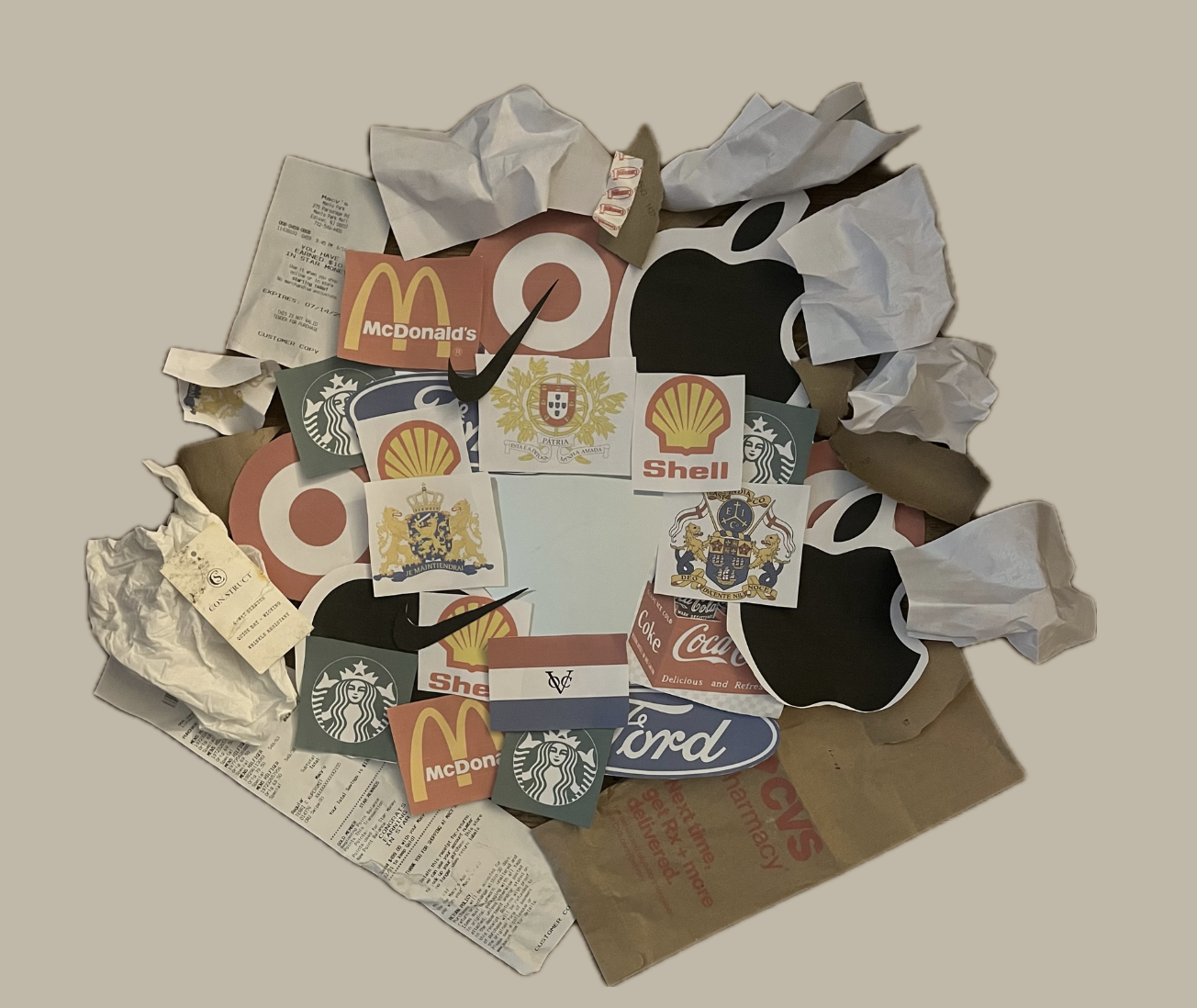
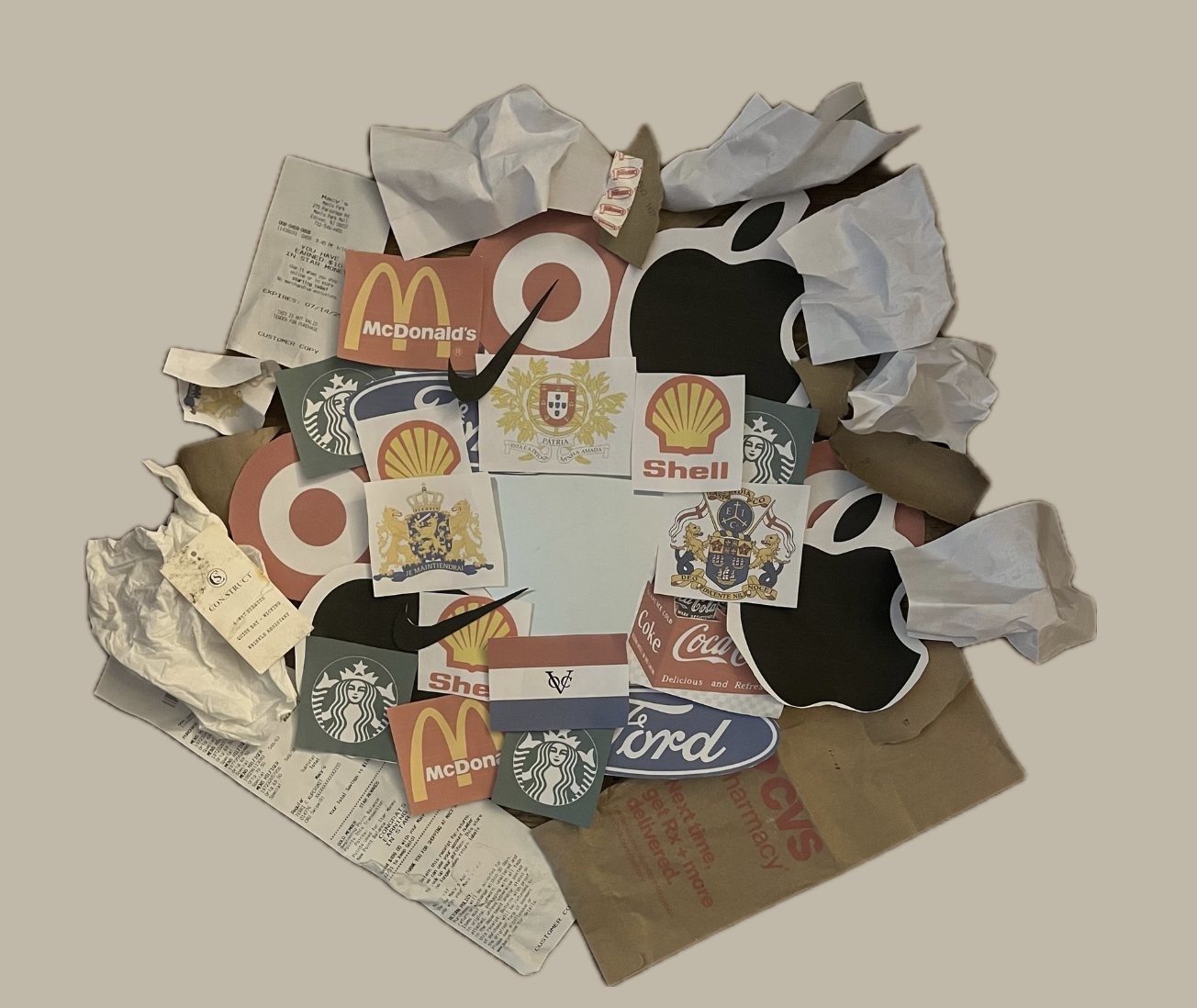
This mirror is layered beneath a plethora of logos, reflecting both the loss of the individual from exploitation and as a reminder for viewers to evaluate their impact in fostering this gradual shift in waste.
The logos are placed in chronological order, with the VOC Monogram representing the Dutch East India Company, crest denoting the British East India Company, and the colonial Portugese coat of arms being closest to the center. They served as the foundations for identifying and “mitigating” waste through territorial expansion and production. These colonial forces then prompted the second wave of images, which includes the early Shell Oil icon, Old Coca-Cola bottles, and the old Ford oval logo. All of these images signify a shift from colonial power to industrial extraction, which created overproduction problems. The third ring consisting of the Nike swoosh, Apple silhouette, McDonad’s arches, Target bullseye, and Starbucks mermaid embody more current examples of capitalism and prominent producers of waste. Their condensed quality displays modern examples of consumer overload. The final ring reflects the literal trash that such overload creates. The abundance of waste is meant to be all encompassing, as arguably the crowded logos and emblems that coat the mirror look wasteful, questioning the productivity of capitalism over time.
