Justice has long been defined by its boundaries: who is protected, what is prohibited, and whose dignity is recognized. Robin D. G. Kelley’s Freedom Dreams: The Black Radical Imagination shifts these questions as to what justice prevents. Rather, Kelley asks what makes justice possible and ultimately arrives at the collective capacity to imagine and create a world beyond oppression and on premises that these repressive systems never granted.
The gaps in conventional and moral philosophy make the absence visible. Jeremy Bentham’s “greatest happiness principle” holds that the right action is whatever produces the most happiness for the most people (Bentham 14). As Dr. Jankovic outlined in her lecture on Locke and Rawls, frameworks such as this assume one universal moral standard applies to everyone; John Locke’s claim in his Second Treatise of Government that “no one is born a leader of a subject” denotes another version of this logic (Locke, Jankovic). Charles W. Mills exposes the problem in “‘Ideal Theory’ as Ideology”, noting that political philosophy presents itself as neutral, but it was built around the “interests and experiences” of “middle-to-upper class white males,” leaving out those shaped by “centuries of white supremacy” and “economic constraints: (Mills 172). The failure is structural, as these theories were never designed to account for the imaginative conditions comprising Kelley’s argument. He finds that justice built on a universal that excludes most people reproduces the inequity it claims to resolve.
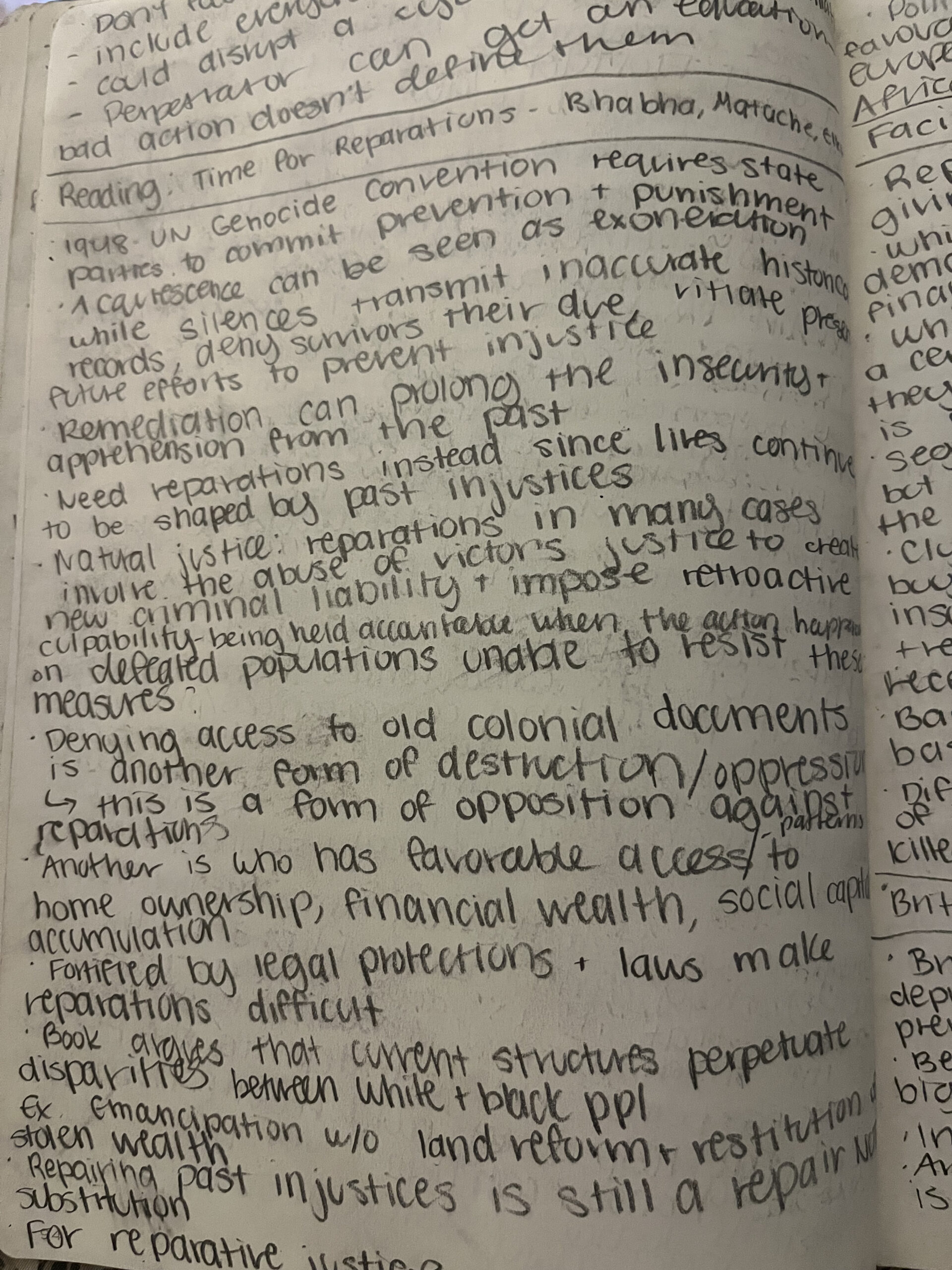
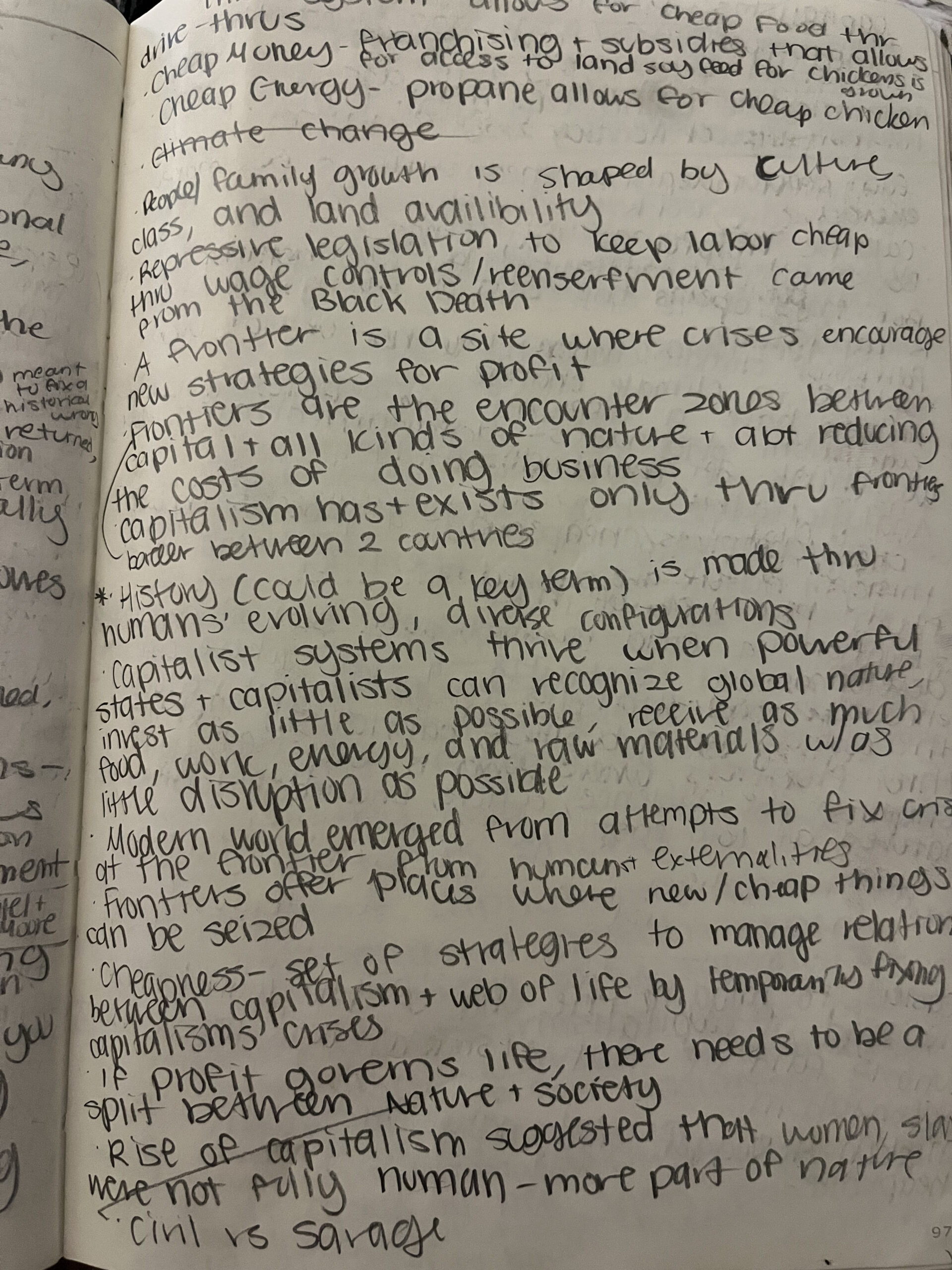
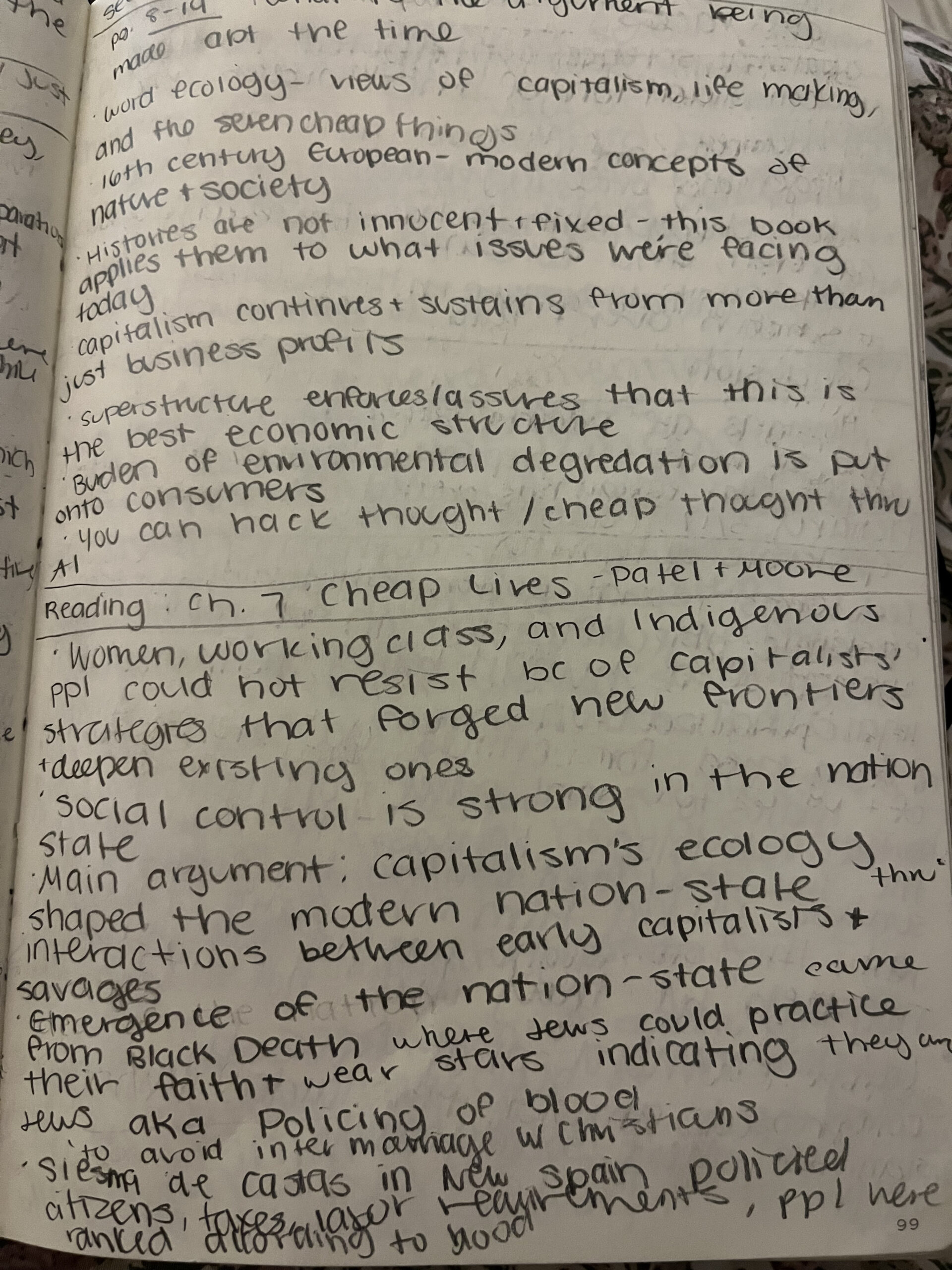
That exclusion had always had material consequences. As Dr. Wiemers explained in her presentation, Making and Enshrining Racial Hierarchies, Fredrick Lugard’s claim that Africans misused their land justified colonial seizure under the pretense that this theft was corrective for those deemed too incompetent (Wiemers). During his conversation with Bill Moyers, Ta-Nehisi Coates traces the same reasoning into American democracy, as white supremacy “doesn’t contradict American democracy; it birthed it, nurtured it, and financed it” (Coates). He continues by describing how later manifestations of racialized exclusion such as segregation served as a mechanism for removing Black communities from society by pulling resources and redistributing those resources (Coates). As Coates explains, redlining solidified this exclusion, creating entrenched wealth disparities that survived the end of the policies themselves (Coates). In A History of the World in Seven Cheap Things, Raj Patel and Jason W. Moore refer to this as the production of “cheap lives”: the systematic devaluation of certain populations built into capitalism’ structure (Patel and Moore 35). This is precisely why Jacqueline Bhabha, Margareta Matache, and Caroline Elkins argue in Time for Reparations: A Global Perspective reparations are necessary: “traces carved by unrepaired past injustice endure in the political, social, economic arrangements bequeathed to the present and future” (Bhabha, Matache, Elkins 3-4). Thus, beyond the acknowledgement of victimhood, public reparations serve as a mechanism for future-building. Recognizing their capacity to restructure society allows communities to pursue opportunities previously foreclosed by systemic injustice.
M NourbeSe Philip’s Zong! Makes this reclamation visible at the level of language. Built from the legal record of Gregson v. Gilbert, a case that framed the murder of enslaved Africans as an insurance dispute, Philip deconstructs and reassembles language. In doing so, she exposes how law reduced people to property while recovering something if the individuals who were erased (Philip). The fragmentation deliberately recreates the disorientation of the enslaved and simultaneously refuses to uphold the court’s logic. Reclaiming the colonizer’s own words to restore voice is a refusal to remain within the terms the system set. Such a creative approach also signifies the potency of imagination and its vitality to the creation of justice.
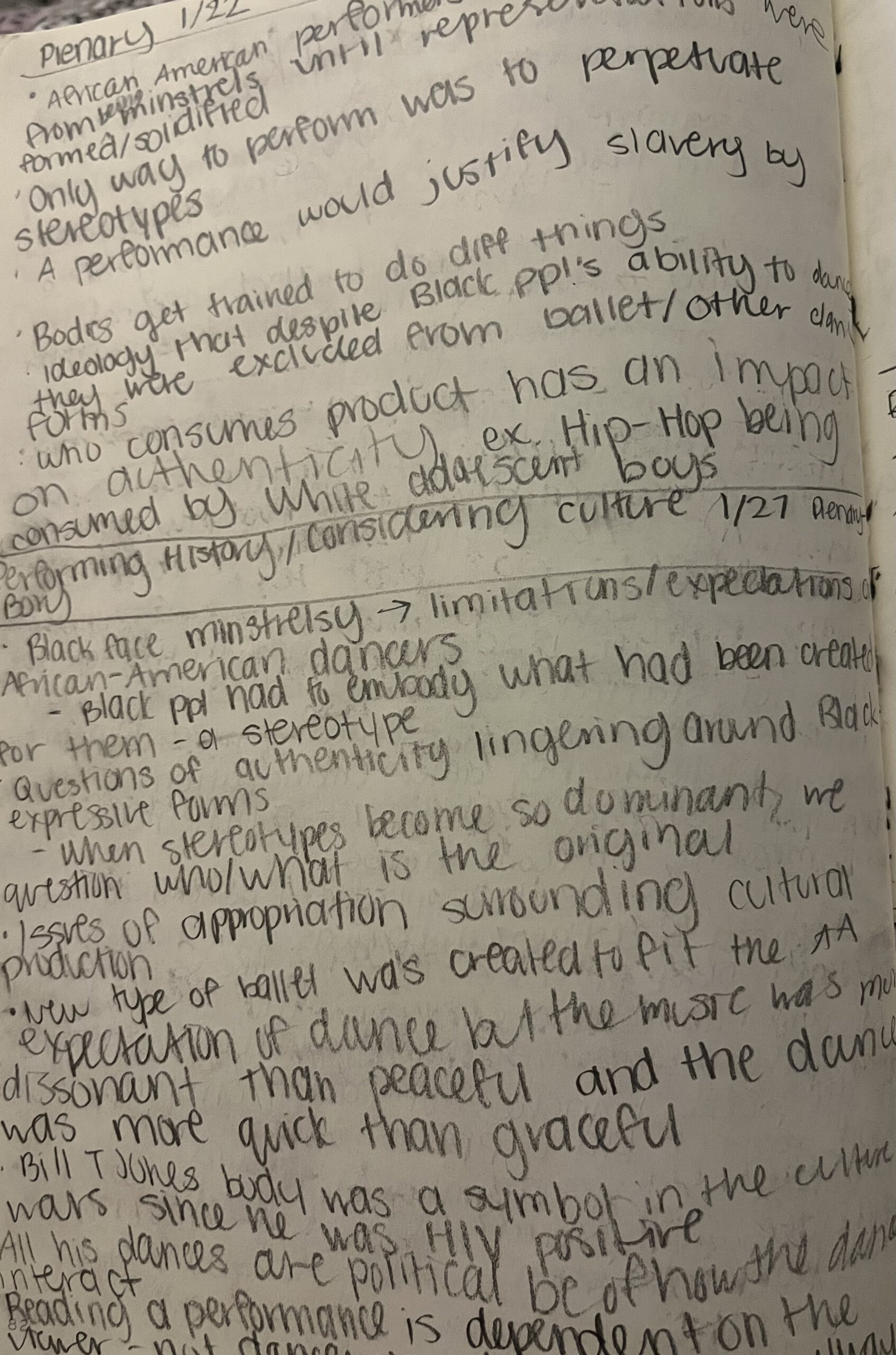
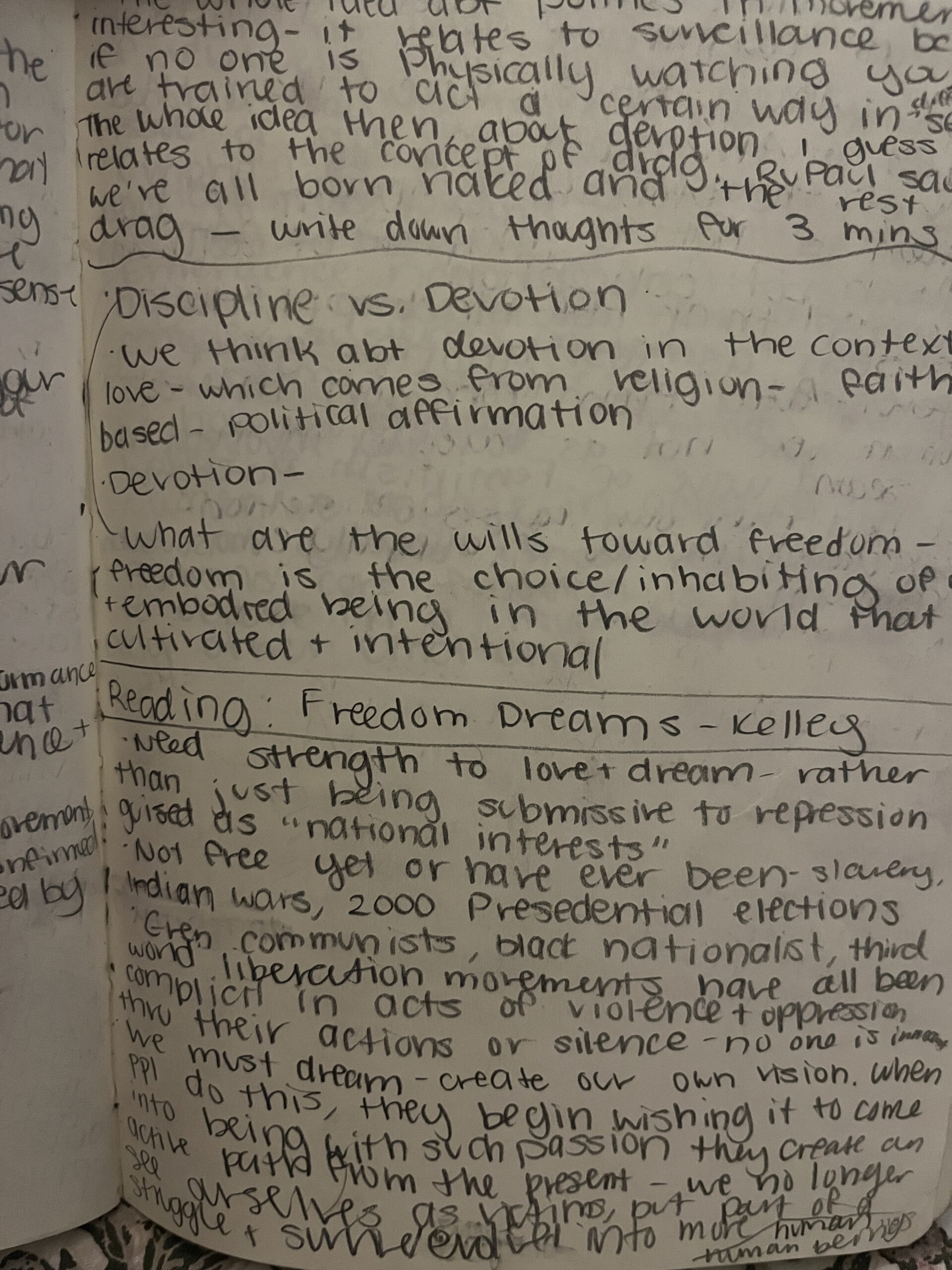
Furthermore, Dr. Bory’s lecture on January 22 regarding cultural consumption used hip hop as an example; when a genre created by Black artists becomes consumed primarily by white adolescent boys, its meaning shifts and its origins become obscured (Bory). This is not a minor distortion, but encompasses the same logic of extraction Coates, Patel and Moore describe as operating at the cultural level. When dominant groups absorb and redefine the expressions of those marginalized, they strip those expressions of the context that provided meaning. Retaining control over what one’s expression means and who gets to shape its interpretation is part of what Kelley calls rejecting victimhood and instead imagining ourselves as part of an ongoing struggle “not only to survive but to evolve into more human human beings” (Kelley 134).
Performance is one site where that refusal becomes active. As Dr. Bory explained in Performing History/Considering Culture on January 27, art is political through how it is interpreted and experienced (Bory). Bill T. Jones enacts this in the Last Supper at Uncle Tom’s Cabin: The Promised Land. The “Cabin” sequences stage violence drawn from generational memory, while “Eliza on the Ice” fractures Sojourner Truth’s “Ain’t I a Woman?” across multiple identities, resisting any single narrative of Black womanhood (Jones). In the final act, bodies are exposed in vulnerability to insist on shared humanity (Jones). Here, justice is performed and left open, as opposed to being declared and resigned to one narrative.
Yet, the openness that performance creates remains susceptible to dominant narratives, such as those described by Marita Sturken in “Cultural Memory in the Wake of Violence”. She contends that framing traumatic events as exceptional creates “a moral cushion that disallows counternarratives” (Sturken 66). When these formidable perspectives frame historical violence as isolated and not systemic, they foreclose the very perspectives Kelley insists justice depends on. As Dr. Lipsker observed in his presentation, Memorialization and Commemorialization, interactive monuments resist this by engaging viewers directly, preventing a single narrative from formalizing, leaving individuals able to form their own interpretations (Lipsker). Keeping memory plural and contested is an act of justice that refuses to let imagination be narrowed by official accounts.
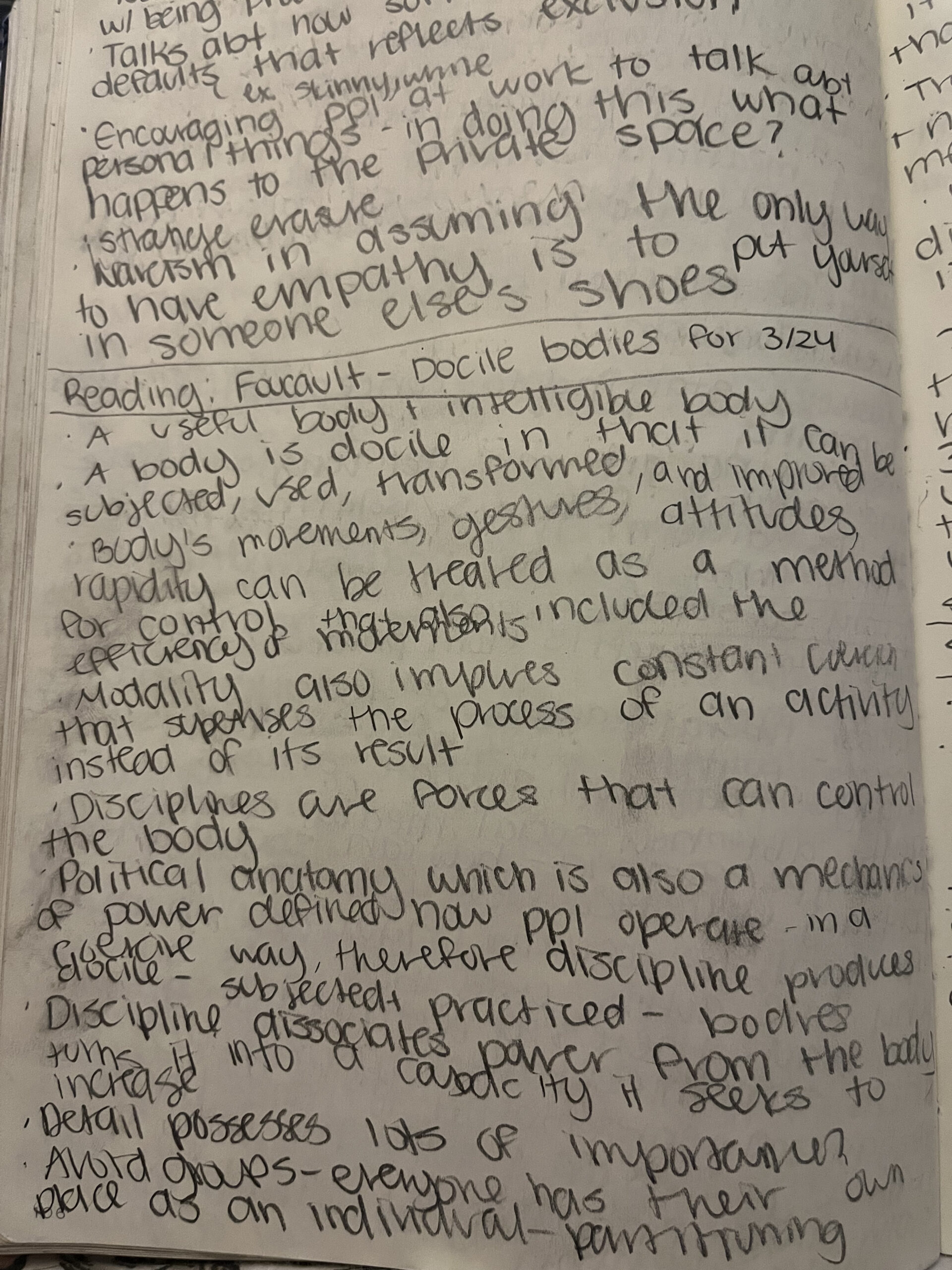
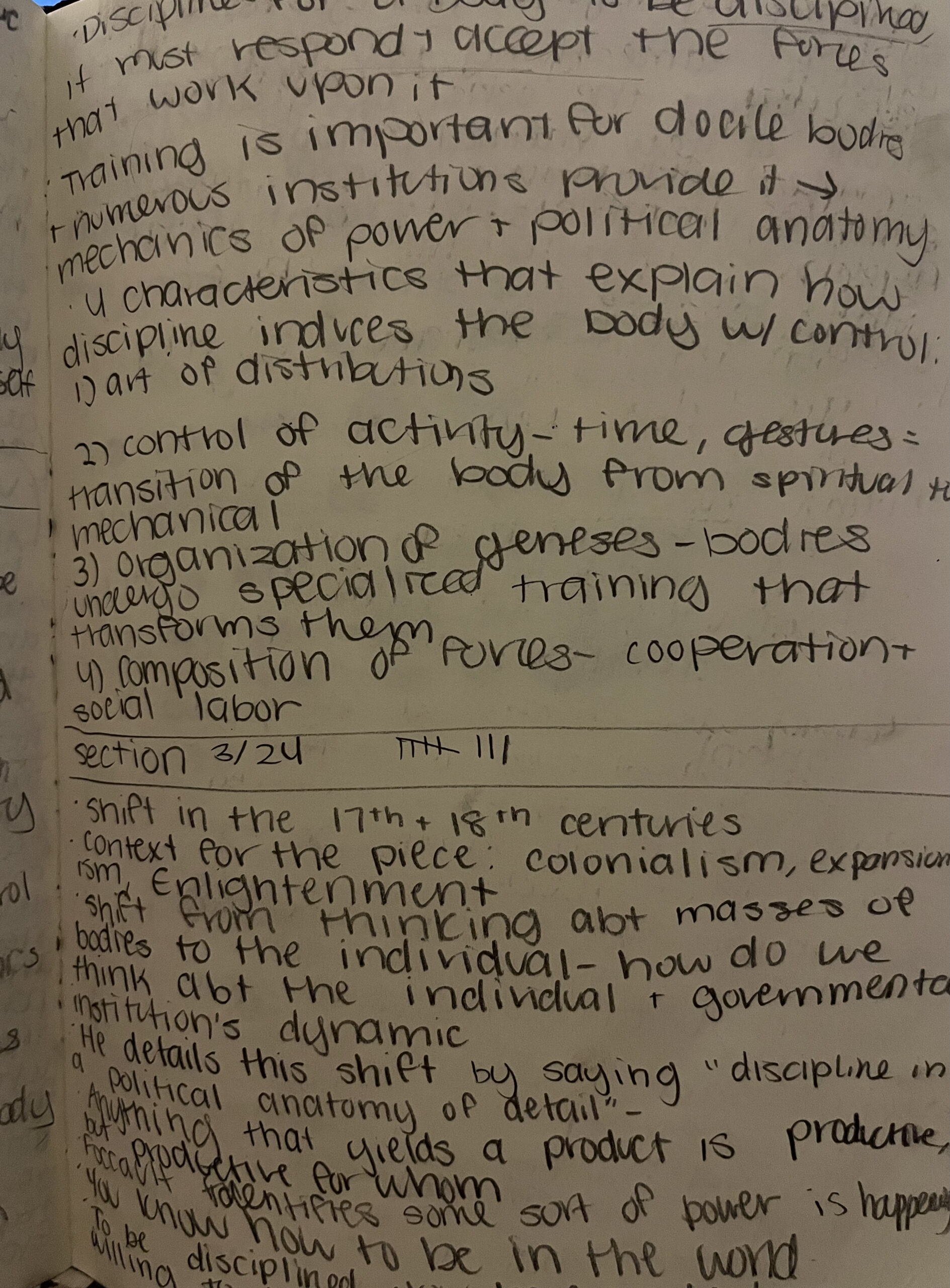
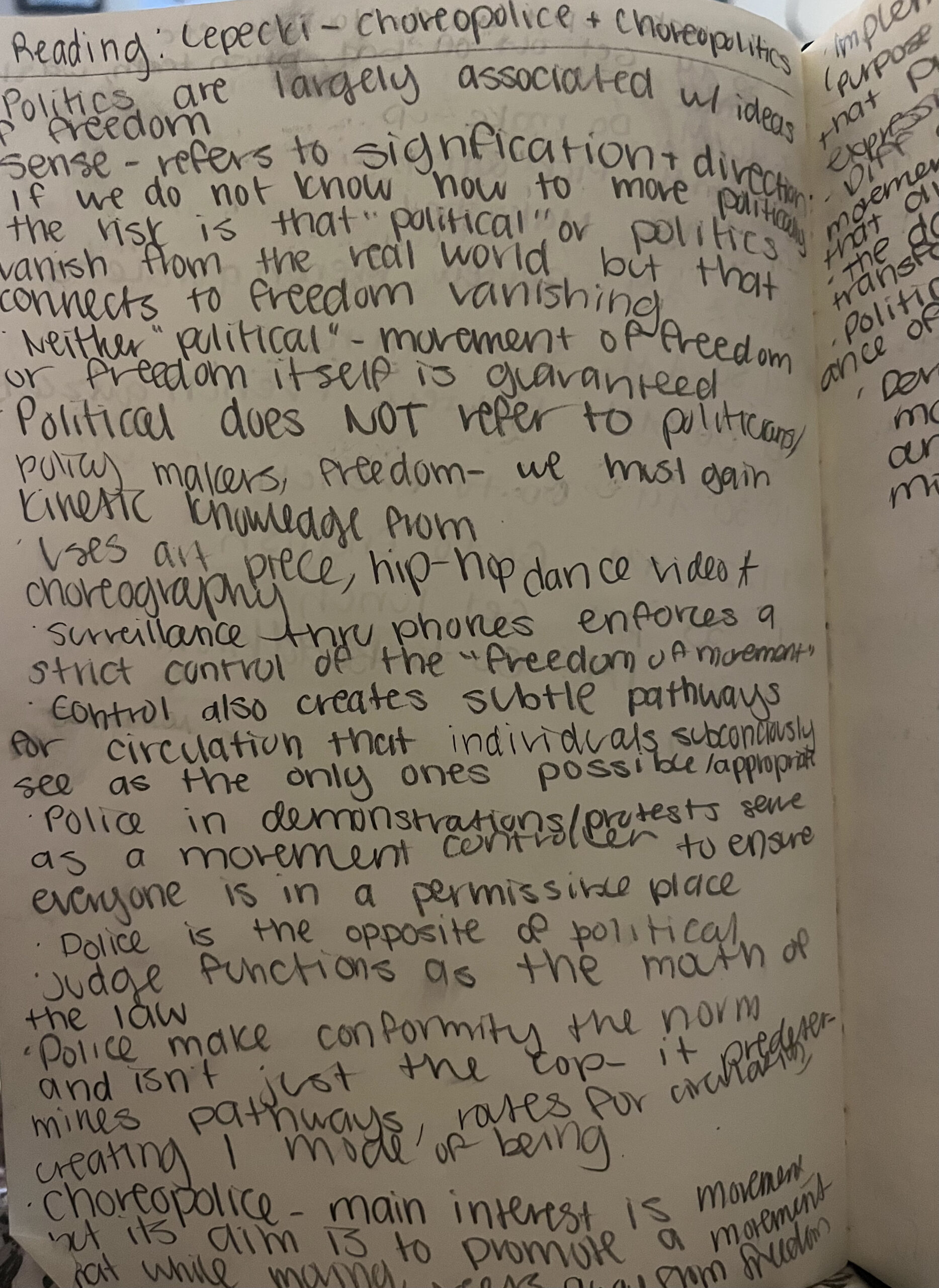
Consequently, at the core level of ongoing structures, the body operates as a site of control. Dr. Bory’s March 26 lecture on surveillance drew on Michel Foucault’s concept of “docile bodies,” denoting the way discipline shapes movement to ensure people are controlled and productive (Foucault, Bory). André Lepecki’s Choreopolice and Choreopolitics: or, the task of the dancer, was also mentioned to indicate how physical movement itself becomes regulated to suppress political expression (Lepecki, Bory). Embodied practices including dance and protest disrupt those controls, opening space for ways of being not sanctioned by the constricting systems established. Again, freedom takes root in the imagination, but it is through the body that this ingenuity becomes a lived reality.
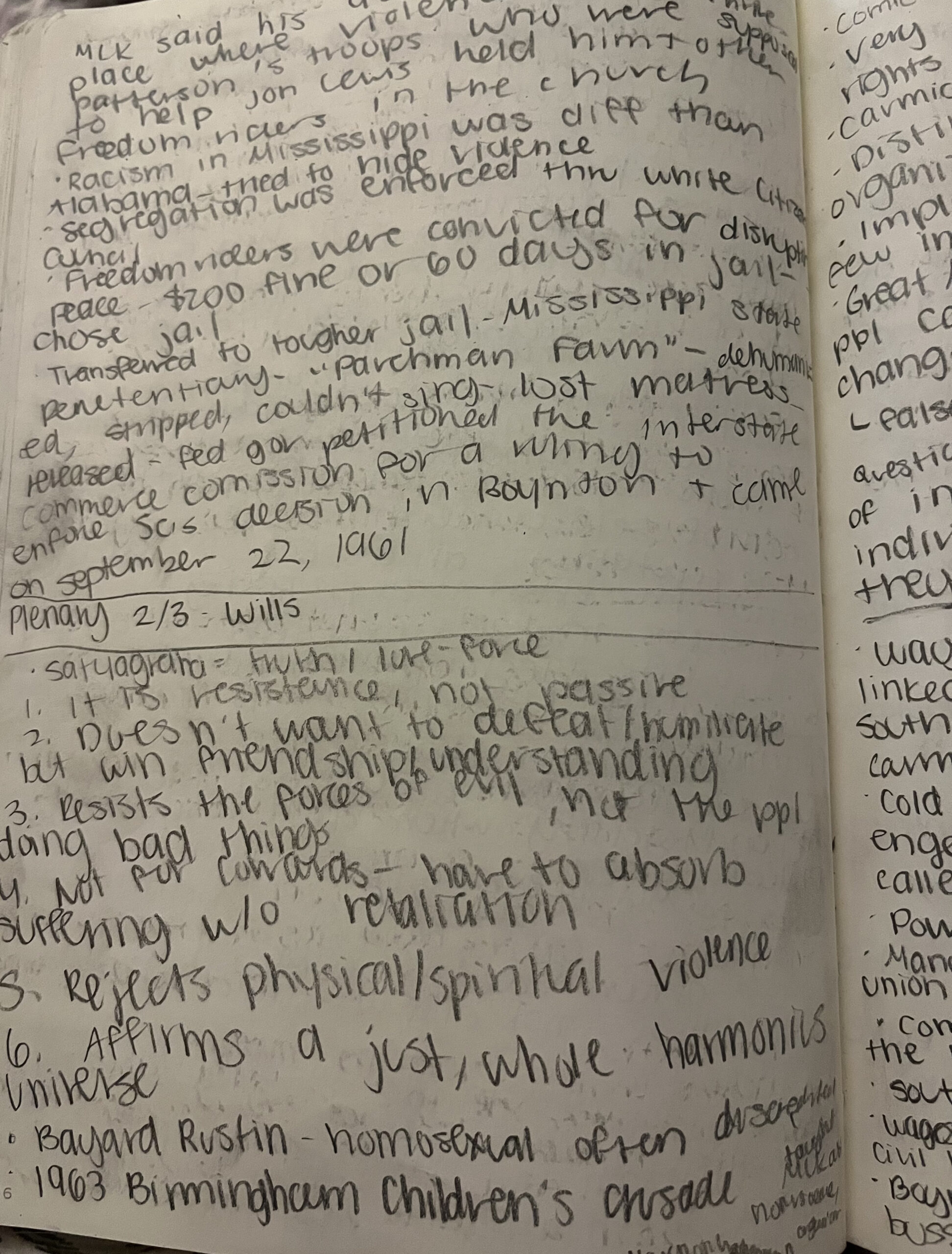
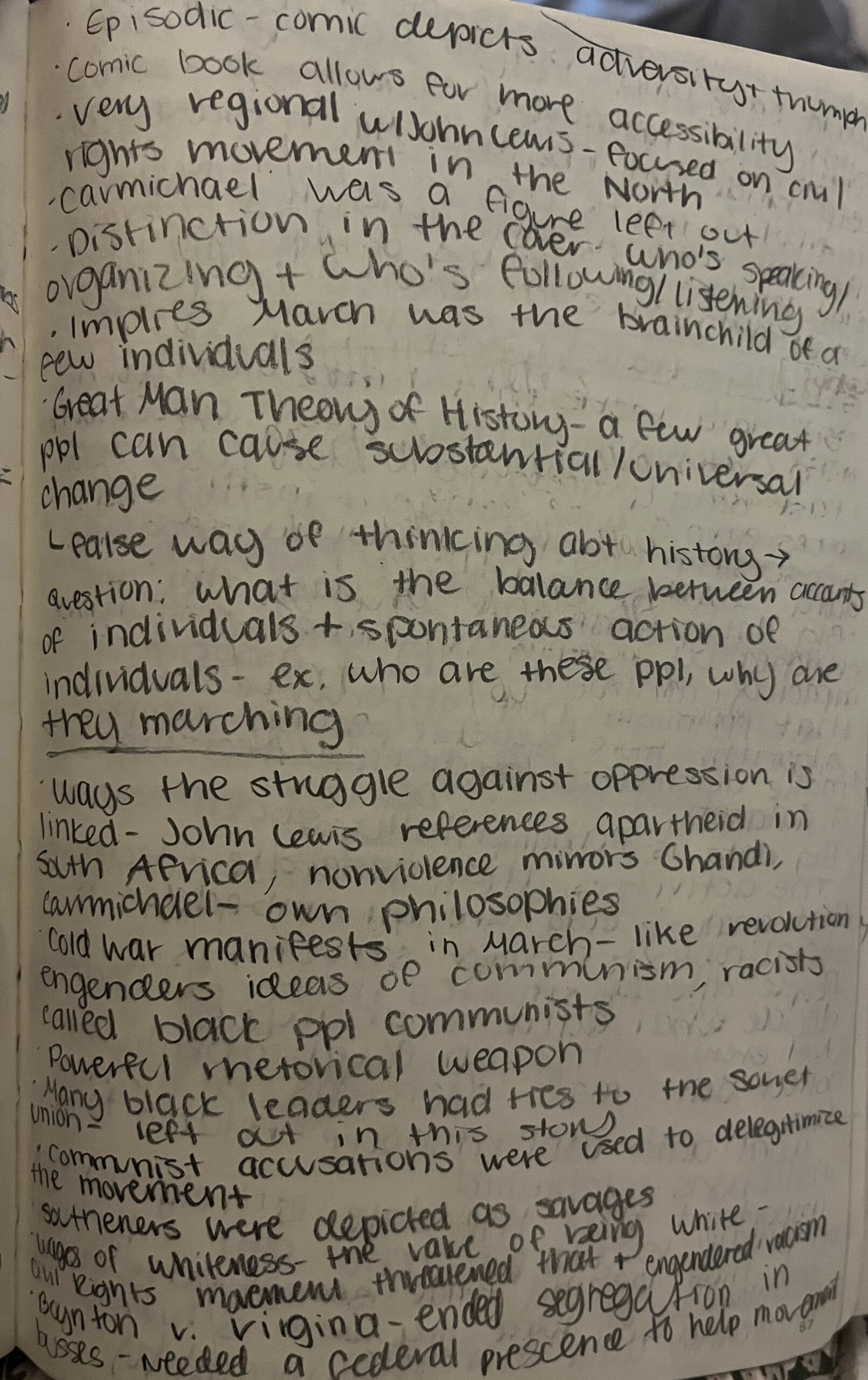
Collective action then transforms such resourcefulness to politics. This is seen directly through the principles encapsulating satyagraha, which Dr. Wills described during her February third lecture as a model of resistance built on truth, nonviolence, and moral transformation. It is also crucial to note that the philosophy’s primary objective is to change opponents rather than merely defeat them (Wills). In other words, satyagraha is an active force that demands participants hold to their principles despite pressures. John Lewis and the activists he identifies in March: Book Two demonstrate what this looks like in practice; through sustained, disciplined action, these leaders reshape political reality by refusing to operate on the system’s terms and continue to forge a new reality (Lewis).
Across these thinkers and examples, imagination emerges as the thread connecting every act of justice examined. It is what allows Philip to dismantle the colonizer’s language from within, drives Lewis and the Nashville students to refuse the world as is, and transforms reparations from mere compensation into the restoration of possibility. Sturken then shows what is lost when that imaginative capacity is barred by controlling narratives and Jones illustrates what opens up when creativity is not apprehended. Kelley’s ideology makes sense of these perspectives by framing imagination as the condition that makes change possible. When people are free to dream collectively, justice becomes something that can truly be built.
Works Cited
Bentham, Jeremy. “Principles of Morals and Legislation.” Google Drive, Batoche Books Kitchener, 1781, drive.google.com/file/d/1WlyLMxknknklO3eQPCk2uOQbkoEeSGcr/view.
Coates, Ta-Nehisi. “ Facing the Truth: The Case for Reparations.” YouTube, Bill Moyers, 2014, www.youtube.com/watch?v=Pm9DJuTrO8Q.
Foucault, Michel. “Discipline & Punish – Docile Bodies.” Stanford University, Vintage Books, A Division of Random House, New York , 1995, web.stanford.edu/class/sts175/NewFiles/Foucault,%20Docile%20Bodies.pdf.
Jankovic, Marija. “Lecture on Locke and Rawls” Humanities 103-0, September 2025, Davidson College. Hance Auditorium. Lecture.
Kelley, Robin D.G. “Preface and This Battlefield Called Life: Black Feminist Dream, Freedom Dreams: The Black Radical Imagination .” Google Drive, Beacon Press, 2002, drive.google.com/file/d/1kl7bTt7ap1qnGp9feEdk0_ZS3ilyvZqq/view.
Lepecki, André. “Choreopolice and Choreopolitics: or, the task of the dancer.” TDR: The Drama Review, vol. 57 no. 4, 2013, p. 13-27. Project MUSE, https://muse.jhu.edu/article/526055.
Lewis, John, et al. March: Book Two. Top Shelf Productions, 2015.
Lipsker, Yaakov. “Lecture on Memorialization and Commemorialization” Humanities 103-0, November 2025, Davidson College. Hance Auditorium. Lecture.
Mills, Charles W. “‘Ideal Theory’ as Ideology.” Wiley on Behalf of Hypatia, Hypatia , Summer, 2005, Vol. 20, No. 3 (Summer, 2005), 2005, drive.google.com/file/d/1wyKOBCQ8E9bf2wC71-pMHjOvX8SkvkZG/view.
Scorer, Mischa, director. Dancing to the Promised Land. BBC, 25 May 2004, https://drive.google.com/file/d/128uhMScne79KwPJZImAwjRWfrORRrRNQ/view.
Sturken, Marita. “Cultural Memory in the Wake of Violence- Exceptionalism, Vulnerability and the Grievable Life.” Google Drive, 19 Feb. 2019, drive.google.com/file/d/1oTwaV7F-SGG22hByj4fYO8dd8uj5pGcG/view.
Wiemers, Alice. “Making and Enshrining Racial Hierarchies: The Imperial Project in Africa” Humanities 103-0, October 2025, Davidson College. Hance Auditorium. Lecture.
Wills, Anne, “Lecture on February 3” Humanities 104-0, February 3, 2026, Davidson College. Hance Auditorium. Lecture.