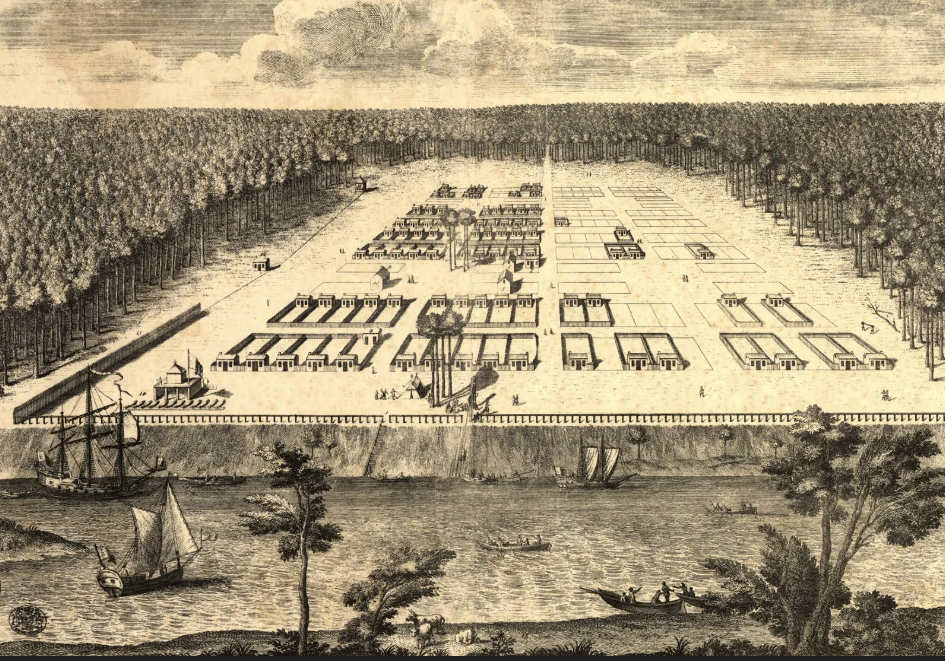
- In Discourse on Colonialism, author Aime Cesaire makes the argument that the destruction of civilizations from colonization is more substantial than its contributions. Instead, Cesaire alleges there is a “principle of ruin”, in which these conquered territories will inevitably collapse (Cesaire 42). This collapse stems from a plethora of reasons, but perhaps the most rudimentary is the idea that colonization is rooted in inequality. Colonizers deemed previous civilizations and cultures, inherent to one’s identity as wasteful, hence why they bear “an alleged right to possess the land one occupies”, for otherwise, resources would “lie forever idle in the hands of incompetents ” (Sarraut, Cesaire). Articulated by former governor-general of Indochina, M. Albert Sarraut, in his attempts to clarify and demonstrate intellectual prowess, actually presents another definition of waste. While initially waste can be perceived as unused materials, an abundance of unwanted products, or trash, Sarraut’s words illuminate Cesaire’s argument that waste also comes in the form of forced submission and suppression of ideals. While such surrender gives way to new infrastructure and education policies, both do not reflect improvement, but embody rejections of pre-existing lifestyles and identities. The inability for either to develop is too wasteful for any of the defeated countries to reach their fullest potentials or ever be justified through the guise of “improvement”.
- In his Second Treatise of Government, John Locke presents separate arguments. He alleges that resources one has claimed should not be “meddle[d] with” by another, as it has already been “improved by another person’s labor” (Locke 5, 34). In other words, someone gains ownership of a resource once they make improvements to it. Subsequently, someone else, looking to acquire and further improve this material, should look elsewhere as it is no longer a vacant resource, but someone elses’ property. Furthermore, the initial changes the owner made to the object should not be overtaken and respected as is. Locke then makes another point, arguing, if resources were acquired without improvement, such as being “tilled and reaped, laid up and made use of”, that resource is not property (Locke 5, 38). Connecting this argument to claims made by colonists, such as M. Albert Sarraut, the former governor of Indochina, who insists the right to possess land or property is derived from unused resources that “lie forever idle in the hands of incompetents” (Sarraut). Sarraut’s perception of who is incompetent and what measures ensure resources are effectively used engenders questions of ownership. While Locke insists ownership is achieved through labor, the alleged “incompetents”, certainly utilized their resources and created sustainable lifestyles and civilizations (Sarraut). Yet, the colonists’ opinion that such practices were not sufficient labor violates Locke’s first point that labor should not be improved upon. Rather, in taking these actions to reflect competence and ingenuity, these colonists reflected Locke’s warnings of greed and improper forms of possession. According to him, making adjustments to already utilized and claimed resources does not ensure ownership. To that point, one can question how much ownership colonists actually have.
- In the Ventus section of Zong!, M. NourbeSe Philip includes a multitude of languages. Located within this section, Page 84 features French, Greek, and Yoruban. Page 84 of Zong! features French and Yoruban. To understand the reasoning and significance behind this choice, readers can first look to the title of this section, “Ventus”. Ventus translates to “wind” but in naming this and all other sections of Zong! In Latin, author M. NourbeSe Philip illuminates her argument, that words can be limiting and separate cultures. Instead, by returning to the latin roots that serve as the basis for words and their interpretations by respective groups, readers are grounded, as they must contend with the new configurations of letters within page 84, for example. Here, words such as “moi” and “omi” are evolved phrases from French and Yoruba cultures, with “moi” translating to me and omi referring to water (Philip 84). These distinct meanings further Philip’s point that new arrangements of the same base letters render differently to each individual, which reflects various cultures and contrasts what Philip describes as an “epistemological fragmented universe”, that focuses on making divisions between cultures (Philip). Instead, when reflecting on atrocities such as the Zong massacre, in which individual’s identities were disregarded, Philip argues that there must be a multilingual world in which language similarly does not hinder one from realizing other’s virtues and cultures. Rather, there must be a collective and ever developing understanding that like the Ventus, flows without bias and constraint to individuals.
- Author Nwando Achebe lists various British and Nigerian punishments in the “Performing Masculinities: Homecoming— and She Becomes a Man” chapter from her book, The Female King of Colonial Nigeria: Ahebi Ugbabe. The latter especially involved spirituality, completely separate from western ideals. However, during the slave trade, unrepentant thieves could be “sold into slavery and might eventually end up on the West African coast” (Achebe 80). However, upon further reflection, criminals’ individuality should not be investigated. Rather, community, a vital component of African culture and perception of justice, is what makes this response actually relevant to Nigerian punishments. Pre-colonial Nigerians emphasized the aforementioned spirituality since they found spirits to control present realities. There needed to be balance which largely stemmed from community harmony and shared responsibility. Nonetheless, when theft was committed, the individual took precedence, and thus, by selling unapologetic thieves into the slave trade, pre-colonial Nigerians ensured offenses would not continue. Instead, by contributing to the western practice of the slave trade, offenders would be devoid of humanity and individuality, which under Nigerian society, they already lack. This dearth is what pre-colonial Nigerians attributed to Western systems and practices, paradoxically signifying how they perceived European’s differing beliefs as punishable.
- Police videos made during the killing of the Gugulethu Seven were played during the Truth and Reconciliation Commission’s hearings. The filmmakers of Long Night’s Journey Into Day then chose to zoom in on the screen, initially, and then followed the weeping mothers of the victims, as some could not even stand without assistance. Doing so embodied the TRC’s emphasis on truth as it is vital to forgiveness. However, showing this footage arguably serves as a hindrance to granting such forgiveness, as the victims’ families see firsthand the brutal condition the Gugulethu Seven was left in by the police. One could argue that witnessing the police’s reactions to the atrocities could reflect remorse, as it allows families to somewhat sympathize with the perpetrators. However, the filmmakers failed to showcase the officers’ reactions, and instead focused on the families. Though the officers’ actions reflected mass atrocities, seeing their raw emotion when looking at the human beings they killed would have been incredibly revealing, and would have furthermore expressed to the audience whether or not they were worthy of forgiveness. In other words, seeing firsthand these officers’ reactions would have better conveyed the TRC’s function and goals.
Works Cited
Achebe, Nwando. “Performing Masculinities: Homecoming— and She Becomes a Man.” Performing Masculinities: Homecoming— and She Becomes a Man, Chapter 3, HSRC Press, 11 Feb. 2011, drive.google.com/file/d/1QuQrFaxE7PmbgTqLdBieCY8qtng6QGUU/view. Accessed 16 Dec. 2025.
Cesaire, Aime. “Discourse on Colonialism.” NYU Press Monthly Review Press, NYU Press Monthly Review Press, 7 June 1950, drive.google.com/file/d/17zk9eq3hyPZWjJ1sWKhemAtHT3suHlSq/view. Accessed 16 Dec. 2025.
Hoffman, Deborah. Long Night’s Journey into Day, Alexander Street, a ProQuest Company, 9 Mar. 2001, video.alexanderstreet.com/watch/long-night-s-journey-into-day. Accessed 16 Dec. 2025.
Locke, John. “Second Treatise of Government.” Second Treatise Of Government by John Locke, Gutenberg Files, Dec. 1689, www.gutenberg.org/files/7370/7370-h/7370-h.htm?ref=americanpurpose.com. Accessed 16 Dec. 2025.
Philip, M. NourbeSe. Zong! Weslyan University Press, 2008, https://drive.google.com/file/d/1x1Pp15Vl9GgEr6ZLuuAqH51VblC4ZwpF/view. Accessed 16 Dec. 2025.
Preziuso, Marika. “On Fracturing and Healing the Conventions of Language.” Small Axe Project, 1 Oct. 2016, smallaxe.net/sxsalon/interviews/fracturing-and-healing-conventions-language. Accessed 16 Dec. 2025.
